

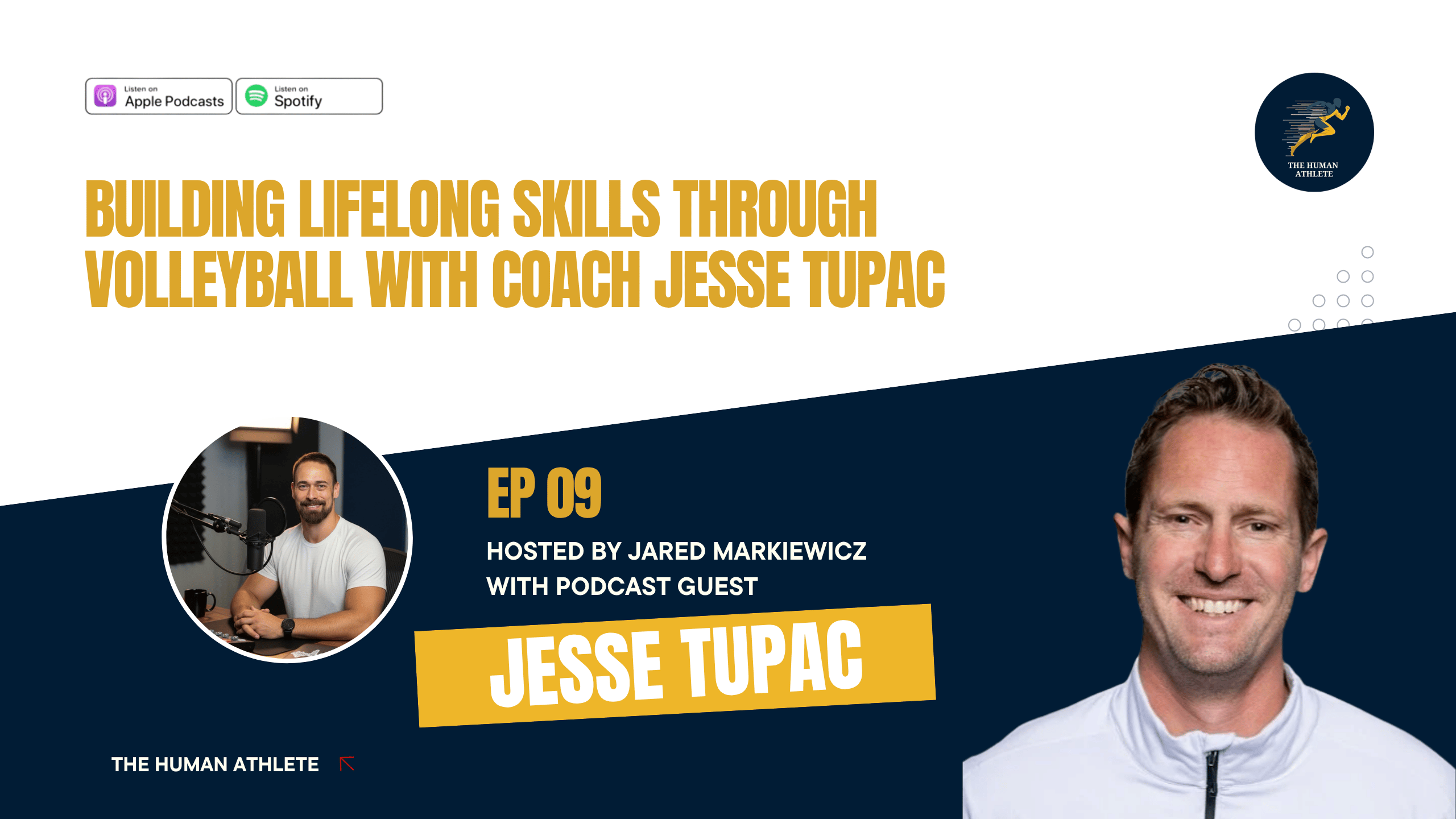
Lessons on Leadership, Longevity, and Lifelong Learning with Jesse Tupac
When it comes to developing athletes and individuals for a successful and meaningful life, few coaches have the depth and breadth of experience as Jesse Tupac. With over 20 years in volleyball, spanning youth clinics to national teams on four continents, Jesse has mentored budding athletes and Olympians alike. In the latest episode of The Human Athlete, he sat down to unpack the foundational beliefs that have guided his career, offering advice relevant for anyone navigating sports, coaching, or simply the pursuit of personal growth.
Volleyball as a Lifelong Community
Jesse’s story begins on the courts of Southern California, a region vibrant with volleyball culture. It’s not just about winning games, he notes. It’s about being part of a community that spans generations and locations.
“Volleyball is a very inclusive community and it’s one that actually people continue to play the sport long into later years of their lives.”
He also touched on how, especially in men’s volleyball, the lineage of great coaches intertwined deeply with fields like education, motor learning, and biomechanics. This scientific mindset has driven American volleyball’s international competitiveness despite having a smaller player base than other sports.
Injury, Identity, and Reimagining Success
Jesse’s playing career ended abruptly due to injury right as he entered UCLA as a top recruit. Instead of succumbing to disappointment, he quickly transitioned into coaching, channeling his passion for the game in a new direction.
This personal setback taught him the importance of cultivating identities that extend beyond sports, a lesson he now impresses upon his athletes.
“It forced me to create identities around myself that weren’t involved in sport, that weren’t involved with not only sport, but just physical expression.”
He emphasizes to those he coaches that sport is only part of who they are, and preparing for life beyond one’s competitive years is vital.
The Power of Movement and Balance
One of the major concerns in youth sports today, Jesse and the host agreed, is the trend toward earlier specialization and its consequences: burnout, overuse injuries, and neglected movement foundations.
Jesse’s coaching philosophy orbits around keeping his athletes, youth and Olympians alike, healthy both physically and mentally. He insists on fostering body awareness, movement literacy, and, critically, an identity beyond achievements on the court.
“If you specialize super early, not only are you putting a huge load on your body physically, but you’re also putting yourself up to the potential for burnout.”
Finding Balance: Lessons from Olympic Athletes
Notably, Jesse’s approach to helping top level competitors is about self awareness and intentional balance, not about denying them the chance to go “all in.”
Whether an athlete’s balance is 90% sport and 10% rest and family, or vice versa, what matters is maintaining touchpoints outside their central pursuit.
The best athletes, Jesse notes, know when to seek support, pursue recovery, and invest in relationships beyond their teams.
He shares stories of current and former athletes who, even at the peak of their careers, instinctively cultivated friendships and outlets beyond volleyball, a crucial factor in preventing isolation and burnout after retiring from sport.
Redefining Leadership: The Expert Model
Jesse brings a refreshing alternative to traditional team leadership structures.
Rather than strict hierarchies or static captaincies, he rotates leadership roles, framing everyone as a potential “expert” in some aspect of the game. This creates a culture where learning and teaching flow freely, regardless of age or official status. A junior might learn a skill from a freshman, and vice versa.
Awareness of strengths and weaknesses, of expertise and humility, is central.
“If you can’t admit when you’re good at something, how are you going to focus on the things that you’re not good at?”
This honest, growth minded approach fosters resilient, adaptable teams.
Lifelong Learning Through Sport
Ultimately, Jesse’s coaching isn’t just about winning volleyball matches. It’s about turning every setback, skill, and social interaction into a lesson for life.
He encourages parents, coaches, and athletes to view sport as a vessel for far greater self improvement.
“If you learn to be a great learner, then if your main motivation is being an influencer or surfing or being a great spouse or friend or you want to cure cancer, learning how to learn through volleyball is also going to help you get really good at all of those other things.”
Sports doesn’t have to be your lifelong passion, but the lessons you take from it can shape your approach to almost anything.
Whether you’re a parent, a coach, an athlete, or just someone interested in personal development, Jesse Tupac’s insights on The Human Athlete offer a roadmap to building resilience, nurturing balance, and fostering a love for learning, on or off the court.
Want to connect with Jesse or learn more about his approach?
Surfside Volleyball Club
Email: jesse@surfsidevolleyballclub.com