

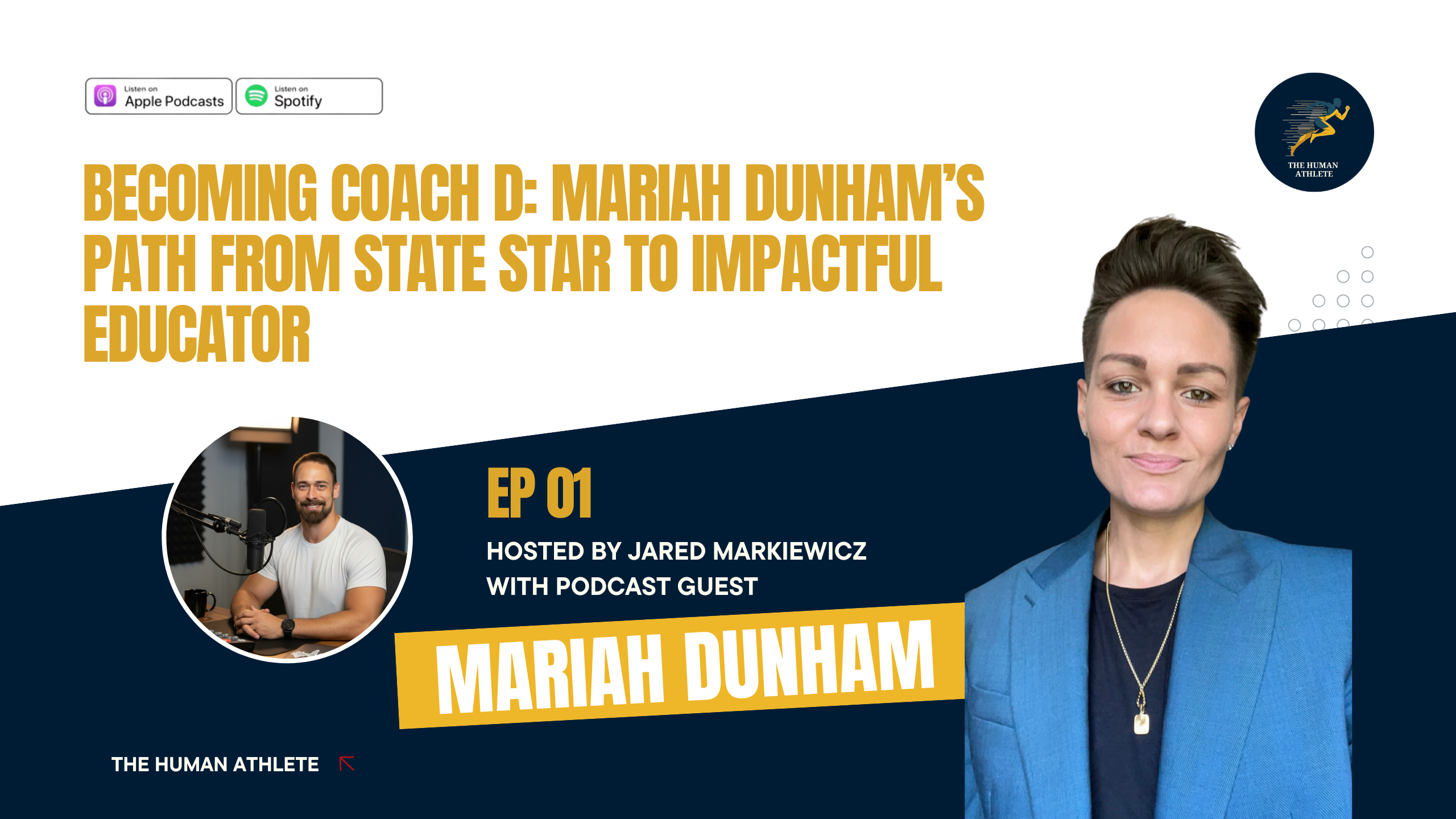
On the latest episode of The Human Athlete, host Jared Markiewicz sat down with Mariah Dunham, a basketball coach whose journey through collegiate sports, coaching, and education is as inspiring as it is instructive. With more than 15 years of experience on the court and in the classroom, Mariah Dunham offered listeners a roadmap for growth, authenticity, and building resilience in athletics — and beyond.
From Big Ten Dreams to Division II Realities
Growing up in Wisconsin, Mariah Dunham dreamed of playing for the University of Wisconsin–Madison, a vision realized after a decorated high school career. Yet, as she shared with Jared Markiewicz, going Division I came with its own pressures:
“All you hear people say is, Go D1, go D1, go D1. And so you feel that pressure…not really realizing how special Division 2 is.”
Her transfer to Northern Michigan University redefined what collegiate sport could be. There, Dunham found not just a team, but a second family, an environment that affirmed her identity and let her play freely. The change offered a balanced focus on academics, a sense of belonging, and ultimately led her to help NMU reach the NCAA regional finals—a feat the program hadn’t seen in years.
Identity Shifts and the Power of Authenticity
One of the episode’s powerful themes is identity: both on and off the court. Dunham’s story is a testament to the challenges athletes face as they transition and redefine themselves, especially after leaving competitive sports behind.
“The Division 1, Division 2 jump was an identity shift…It essentially put you in a place where you were all of a sudden recognizing, hey, I can be student athlete.”
For Dunham, the journey included learning to advocate for herself, growing from mistakes, and later becoming a mentor for athletes who needed guidance—especially those, like herself, navigating uncharted territory as first-generation college students or coming out as LGBTQ+.
Meeting Others Where They Are
As a coach and educator, Dunham stresses the importance of empathy and meeting people where they are, not just where you expect them to be. Whether coaching high school basketball, teaching physical education, or leading health classes, her approach centers on listening and sharing vulnerably:
“We’re all humans having a human experience… When a kid’s struggling…it invites me in to say, hey, I was here. I know how you feel.”
Her students, who affectionately call her “Coach D,” respect her not just for her technical skills, but for her openness. By sharing her own battles — from depression to identity — she creates a sense of connection and trust.
Movement Is Medicine: Rethinking How We Teach and Learn
Perhaps most innovative is Dunham’s integration of movement into education. Noticing her students were sluggish, distracted, and disengaged, she petitioned her principal to rework health class: shorter lectures, more time for physical activity. The results? Fewer behavior issues, improved mood, and better focus on academics.
“Movement is medicine…I found that assignments were getting done. I found that their headspaces were better. After class they were happier.”
Her teaching philosophy echoes a growing body of research on the positive effects of movement on cognition, mental health, and overall wellbeing. It’s a game-changing reminder for educators and parents alike: Kids — and adults — learn best when they move.
Consistency, Self-Care, and Lifelong Learning
Despite her accomplishments, Dunham is candid about her own struggles, especially maintaining health and fitness as life grows more complex after college. With a young family, a coaching career, and a new pursuit of her doctorate, finding balance is a constant challenge:
“Being more consistent with my own health…I think is like a very big priority for me right now.”
Her message to listeners: It’s normal to struggle, and owning those challenges is where growth happens.
Final Thoughts: Be the Example
Throughout her journey, Dunham exemplifies what it means to lead by example—on the court, in the classroom, and in life. Her story is a reminder to athletes, coaches, and educators everywhere: be authentic, be curious, meet people where they are, and never stop moving forward.
Whether you’re a former athlete searching for your next chapter, a coach shaping the next generation, or simply looking to improve your own life, the lessons from Coach D’s story on The Human Athlete resonate far beyond basketball.